-
Application software enhances productivity, decision-making, and collaboration by automating tasks and streamlining workflows.
-
Understanding the types of application software and their benefits helps businesses stay ahead in the digital age.
Application Software: Types, Benefits, and Future Trends
Published on: 27 February 2026
Last updated on: 15 June 2026

Imagine you're at work, tackling a complex task, and the first thing you do is open a software application. It could be Microsoft Excel, Google Sheets, or even a design tool like Canva.
Now, imagine trying to complete that same task without any software.
It’d be a massive struggle, right? This is the silent power of application software.
Whether you’re drafting a report, managing a project, or even designing a logo, application software is at the heart of our productivity.
But here's the thing: while most people use these tools daily, they rarely stop to think about how they actually work or how different types of application software can help in different scenarios.
So, have you ever wondered-
- What makes an application software truly effective?
- Why do we depend on them so much, and what future opportunities do they open up for businesses and individuals alike?
Let’s dive into the world of application software, its types, benefits, and how it’s changing the way we work.
What Is Application Software and Why Does It Matter?
In simple terms, application software is designed to help us perform specific tasks on a computer or digital device. It’s anything from Microsoft Word that helps you create documents, to photo-editing software like Photoshop.
These tools are essential to the modern-day workflow, helping us save time, enhance creativity, and increase productivity.
You might have used Microsoft Excel to track your expenses, or Google Chrome to browse the internet; these are just a few examples of how application software impacts daily life.
But,
What makes them so crucial?
What would happen if we didn’t have them?
The Benefits of Application Software:
- Improved Productivity: Software applications automate repetitive tasks, helping you accomplish more in less time. Whether it's data entry, calculations, or email management, software allows you to focus on higher-level tasks.
- Better Decision-Making: When used effectively, application software organizes and analyzes data, offering insights that aid in business decisions. For instance, CRM software helps businesses track customer data and improve engagement.
- Enhanced Collaboration: Tools like Google Docs or Slack enable teams to work together, even if they’re in different parts of the world. This is essential in today’s remote-first business culture.
- Cost-Effective Solutions: Instead of hiring multiple specialists, businesses can use all-in-one software packages that combine various functionalities, saving both time and money.
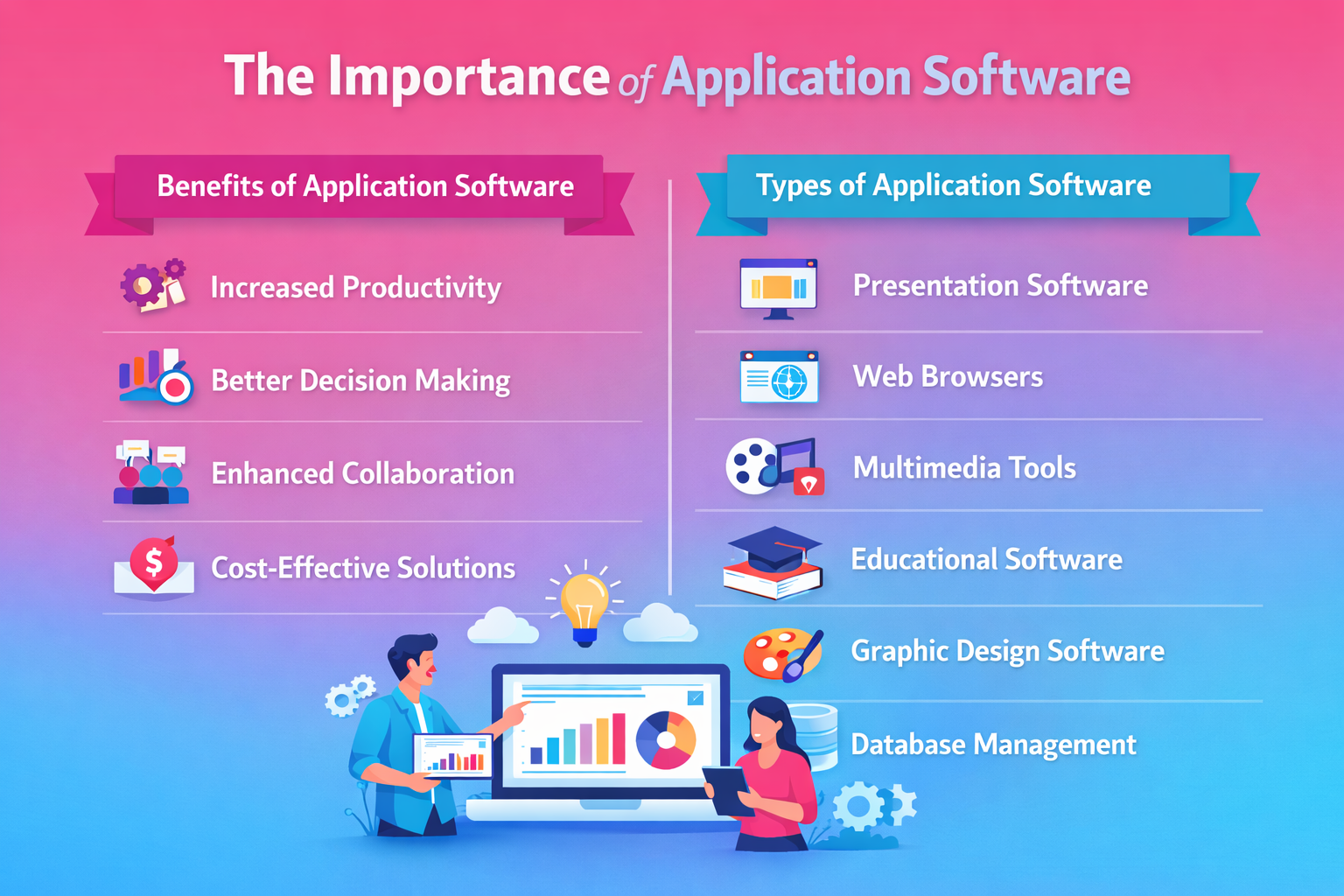
Types of Application Software
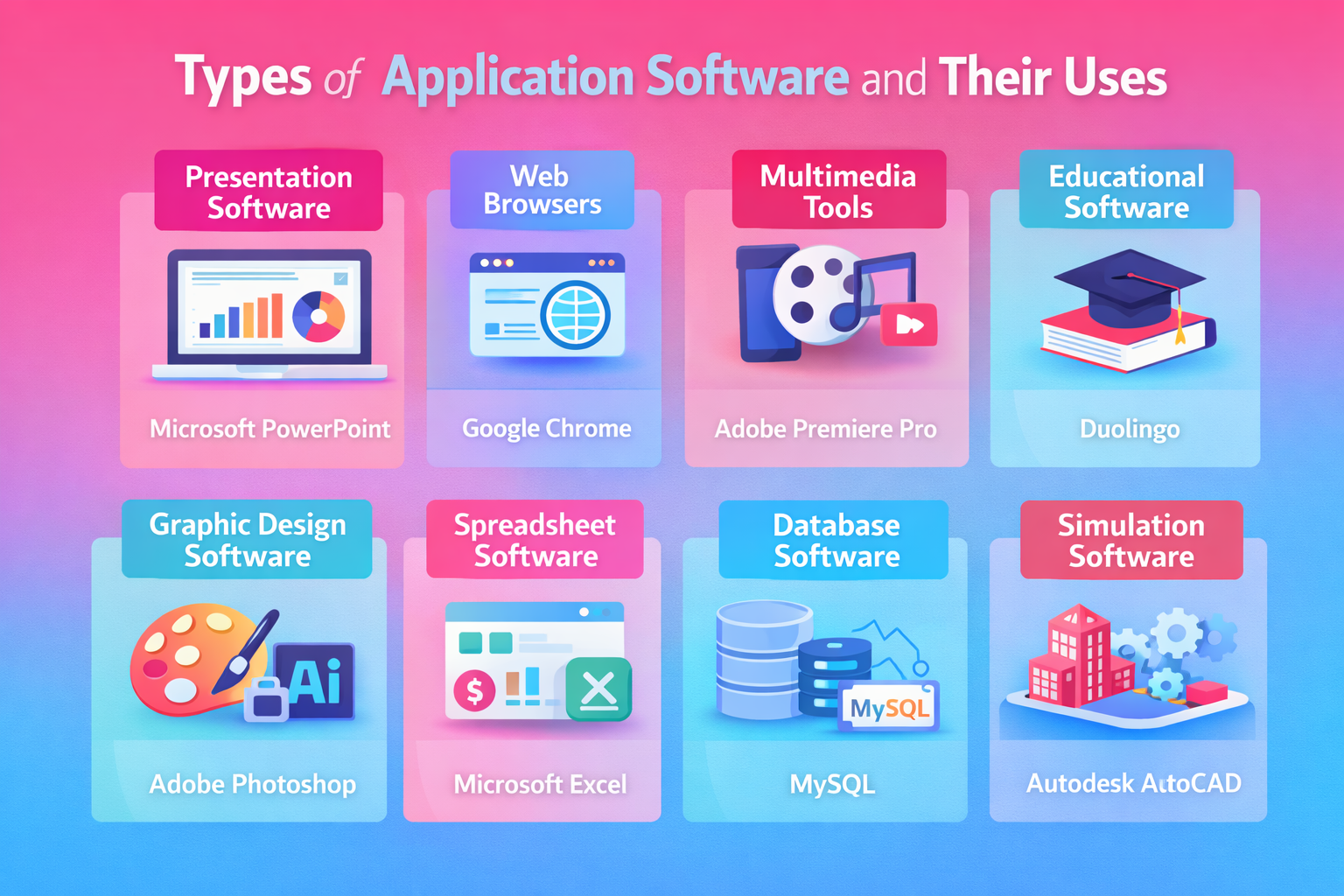
While many of us use software every day, few understand the variety of tools available and how they can serve different purposes. Here’s a breakdown of the main types of application software you might encounter:
1. Presentation Software
Think Microsoft PowerPoint or Google Slides. Presentation software helps organize text, images, and videos into a cohesive format for meetings, pitches, and webinars. It's essential for visual storytelling and engaging audiences.
- Example: When you’re presenting a business proposal, you don’t want to just read text. With PowerPoint, you can add visuals, animations, and charts that help communicate your message more effectively.
2. Web Browsers
Applications like Google Chrome and Mozilla Firefox allow us to access the internet. Without browsers, we wouldn't be able to explore the web.
- Example: Browsers allow us to research, access information, and connect with people from anywhere in the world.
3. Multimedia Software
This category includes tools like VLC Media Player and iTunes, which help manage and play audio, video, and images. Multimedia software is essential for creating, editing, and viewing content.
- Example: If you're a video editor, you’ll likely use software like Adobe Premiere Pro or Final Cut Pro to cut, edit, and enhance your video projects.
4. Educational Software
Educational apps like Google Earth or Duolingo offer interactive learning experiences, providing knowledge in a fun and engaging format.
- Example: Learning a new language? Duolingo makes it fun and easy, allowing users to track progress, complete lessons, and practice their skills regularly.
5. Graphic Design Software
Adobe Photoshop and Illustrator fall into this category. They’re used by designers to edit and create visual content, from marketing materials to digital art.
- Example: A marketing team might use Canva to design a poster for an upcoming event, ensuring it’s visually appealing and on-brand.
6. Spreadsheet Software
Software like Google Sheets or Microsoft Excel is widely used for data analysis, organizing information, and performing calculations.
- Example: A finance manager might use Excel to calculate budgets, create forecasts, or generate detailed reports based on numerical data.
7. Database Software
Applications like Microsoft SQL Server or MySQL store and manage data. Whether you're running a website or a company, managing large amounts of data is crucial for operations.
- Example: An e-commerce website would rely on MySQL to store customer orders, manage product inventories, and track user behavior.
8. Simulation Software
This type of software simulates real-world scenarios for training, education, or entertainment. Autodesk and TeamViewer are two examples.
Example: Autodesk is used by architects to create digital simulations of buildings, allowing them to visualize the structure before construction begins.
Why Application Software Is the Backbone of Digital Transformation
In today’s business environment, digital transformation is not just a buzzword; it’s a necessity. Application software plays a critical role in this process, helping businesses automate tasks, analyze data, and create better customer experiences.
For instance, businesses in industries like healthcare, finance, and education are increasingly relying on custom application software to improve operational efficiency.
The future of application software looks promising, with advancements in AI, machine learning, and cloud computing creating new opportunities for businesses to innovate and streamline their processes.
Future of Application Software: What’s Next?
The future of application software is exciting. As technology continues to evolve, we can expect to see more integrated and intelligent tools that go beyond simple automation.
Here’s what’s on the horizon:
- Artificial Intelligence (AI) Integration: More software applications will integrate AI, providing users with predictive analytics, smarter decision-making tools, and enhanced automation.
- Cloud-Based Applications: With businesses moving more towards remote work, cloud-based software will continue to rise in popularity, offering flexibility and scalability without the need for extensive hardware infrastructure.
- Personalization: Expect applications to become more personalized, offering tailored experiences based on individual preferences, behaviors, and needs.
Conclusion: Embrace the Power of Application Software
From simple tools like Word processors to complex systems like ERP software, application software has transformed the way we live and work.
Whether you're managing finances, creating marketing materials, or even learning new skills, there’s an app for that.
The key takeaway? Application software isn't just about performing tasks; it’s about making your life easier, more efficient, and more productive.
If you’re looking to enhance your business processes, boost your personal productivity, or take your skills to the next level, leveraging the right application software is your first step towards success.
Ready to boost your productivity with the right tools?
Explore Mediusware’s comprehensive software solutions and find the perfect fit for your business needs. Get in touch with us today to discover how we can support your growth.
Frequently Asked Questions
Application software helps people do real tasks like writing documents, managing data, browsing the web, and editing media, saving time and reducing manual work. It boosts productivity both at work and in personal life.

We are the Mediusware Editorial Team, passionate about crafting insightful content on technology, software development, and industry trends. Our mission is to inform, inspire, and engage our audience with well-researched articles and thought leadership pieces. With a deep understanding of the tech landscape, we aim to be a trusted source of knowledge for professionals and enthusiasts alike.
Featureblogs
01
The 12 Most Powerful LLMs: Powering Tomorrow’s Tech Landscape02
Is Golang Still the Right Choice in 2025?03
The Top 10 Most Popular Java Frameworks04
Haptic Feedback: Why Touch is Becoming the Most Powerful Experience in Tech05
Why Software Companies Are Turning to Strategic Partnerships for Faster Growth01
The 12 Most Powerful LLMs: Powering Tomorrow’s Tech Landscape02
Is Golang Still the Right Choice in 2025?03
The Top 10 Most Popular Java Frameworks04
Haptic Feedback: Why Touch is Becoming the Most Powerful Experience in Tech05
Why Software Companies Are Turning to Strategic Partnerships for Faster Growth